Posted on Leave a comment

Kamala Harris’ travels and comments clearly point to 2028

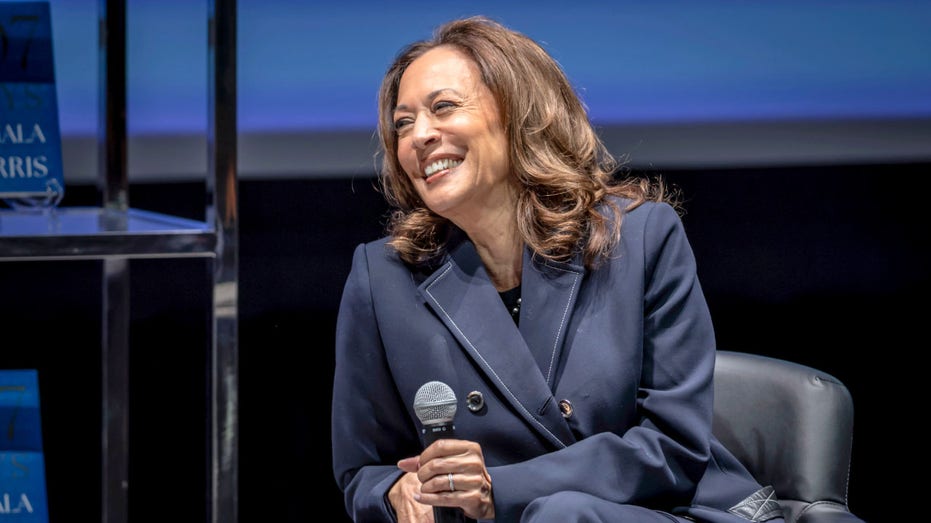
In a move sure to spark more 2028 speculation, former Vice President Kamala Harris will appear next week at a major Democratic Party cattle call in this preseason for the next White House race.

Harris will speak on Friday in New York City at the National Action Network’s 35th Anniversary Convention.

The gathering, hosted by the civil rights organization’s founder, the Rev. Al Sharpton, will give the former vice president and other potential Democratic presidential contenders appearing at the confab an opportunity to speak directly to an influential gathering of Black leaders and activists who are key players among the party’s base.

It’s the latest sign that where Harris is going, and what she’s saying and doing, is increasingly generating buzz that the Democratic Party’s 2024 presidential nominee is on a likely glidepath toward another White House bid in 2028.

KAMALA HARRIS: OUT OF OFFICE BUT BACK ONLINE

“Of course we are reading tea leaves,” a veteran strategist in the former vice president’s political orbit told Fox News Digital.

The strategist, who asked to remain anonymous to speak more freely, emphasized that “the only signal that is very clear is that she is going to continue to be an incredibly important fighting force and voice for Democrats and for the country.”

Harris was mostly out of the headlines for a couple of months after the end of former President Joe Biden’s administration early last year. But she started stepping back into the political spotlight last spring and summer, including headlining Democratic National Committee fundraisers.

HARRIS, NEWSOM, STIR 2028 SPECULATION AT MAJOR DEMOCRATIC PARTY MEETING

Her strategic decision last summer to pass on launching a 2026 gubernatorial campaign in her home state of California was seen as a clearing of the runway for a 2028 presidential bid. And her nationwide book tour for her memoir on her abbreviated 2024 campaign, when she succeeded Biden as the Democrats’ standard-bearer, has helped keep her very visible while building up her email lists and boosting donor interest.

With her six-month book tour coming to a close, Harris, who made history as the first female and first Black vice president in the nation’s history, is set to make a swing through the South later this month. Her stops to help state parties fundraise include South Carolina, a key early-voting primary state in the Democrats’ presidential nominating calendar, as well as the key general election battlegrounds of Georgia and North Carolina. Harris narrowly lost both states and the five other key battlegrounds to President Donald Trump in the 2024 election.

“Kamala Harris continues to be an incredibly inspiring force within the Democratic Party, especially among women, among Black voters and voters of color,” the strategist in her political circle emphasized.

Harris has also been getting more involved on the campaign trail, recording ads for the Democratic National Committee and for the Virginia Democrats with early voting underway in the state’s April 21 congressional redistricting referendum.

After endorsing Rep. Jasmine Crockett in last month’s Democratic Senate primary in Texas, Harris reached out to the nomination winner, state Rep. James Talarico. She’s also talked to other winners in last month’s primaries.

HARRIS RIPPED BY THE RIGHT OVER TRUMP IRAN WAR SPEECH PRE-BUTTAL

Harris has also been increasingly critical of President Donald Trump’s military strikes on Iran.

“He brought America into a war that people don’t want, he has put American troops in harm’s way, costs are rising by the day, and, meanwhile, he has done nothing to address the needs of the people of America,” the former vice president argued in a social media video posted ahead of Trump’s primetime address to the nation last week.

Harris’ comments quickly ignited a sharp rebuke from conservatives on social media.

Among those responding was Rep. Tom Emmer of Minnesota, the House Republican majority leader.

“It’s pretty disgraceful for you to claim President Trump has done nothing to meet the needs of the American people,” Emmer posted on X. “Here’s the truth: He’s cleaning up the chaos YOU caused here in the United States and across the globe, and is making America great again.”

The reaction from Republicans is a sign that it’s not only Democrats who see Harris as a potential leading contender for the 2028 nomination.

Looking ahead, the strategist stressed that “no one knows what she is planning to do for 2028, but until she tells us herself, she is going to continue to travel, speak up about the issues she cares about the most, and the tremendous damage that Trump and this administration are doing to this country and how Democrats are going to continue to fight back.”
Posted on Leave a comment

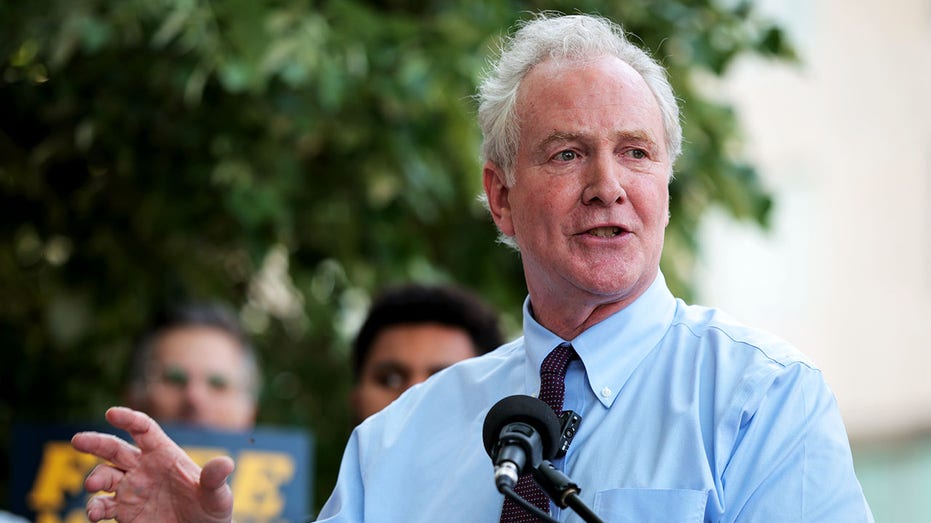
DHS slams Democrat Sen Chris Van Hollen claim, says illegal alien caused crash while fleeing ICE

The Department of Homeland Security (DHS) on Saturday pushed back on claims by Sen. Chris Van Hollen, D-Md., that ICE agents struck an “asylum seeker,” saying the man is an illegal immigrant who caused a crash while trying to evade arrest.

DHS told Fox News that the man in question is a Honduran illegal immigrant with a final order of removal dating back to 2018.

According to DHS, Immigration and Customs Enforcement (ICE) officers attempted to arrest the individual, identified as Ever Omar Alvarenga-Rios, on Thursday in Baltimore, but he allegedly tried to evade arrest.

When officers conducted a vehicle stop, Alvarenga allegedly failed to comply with law enforcement and “drove recklessly” through the city, DHS said.

DHS SAYS ILLEGAL IMMIGRANT INJURED HEAD AFTER HITTING CONCRETE WALL WHILE FLEEING ICE, DENIES BEATING CLAIMS

DHS claimed that Alvarenga then “slammed on his brakes,” causing a multi-vehicle crash.

He then attempted to flee on foot and ignored law enforcement commands, DHS said, adding that ICE officers “followed their training and used the minimum amount of force necessary to make the arrest.”

DHS said the two officers involved in the incident were injured and taken to the hospital.

DHS SAYS ICE AGENTS RAMMED BY VEHICLES AMID MINNEAPOLIS ENFORCEMENT SURGE: ‘AGGRESSIVELY ASSAULTED’

“This illegal alien broke our laws, resisted arrest, sent two ICE law enforcement officers to the hospital, and endangered the general public. Thankfully both our officers are expected to make a full recovery,” DHS Acting Assistant Secretary Lauren Bis said in a statement.

“This dangerous attempt to resist arrest comes after sanctuary politicians have encouraged illegal aliens to evade arrest by hosting webinars instructing illegal aliens how to avoid being caught. Sanctuary politicians must stop encouraging this reckless behavior that endangers illegal aliens, our officers, and the public,” she added.

Van Hollen on Saturday posted photos on social media of the man in a hospital bed, describing him as an “asylum seeker” who was rear-ended by an ICE vehicle while driving to work Thursday in Baltimore.

According to Van Hollen, the man suffered “significant injuries to his head, chest, back and hands.”

The Maryland Democrat also said the man was detained and claimed ICE was violating his rights by denying him access to attorneys.

Fox News Digital has reached out to Van Hollen’s office for comment.

Posted on Leave a comment

A de facto pro forma: Why Washington fixated these sessions as the DHS shutdown dragged on through recess

Carpe diem. If you’ve wondered why all of Washington buzzed so much this week about “pro forma” sessions in the House and Senate, here’s your chance to find out why.

Come on now. Tempus fugit. There’s no time like the present. Hopefully, when you finish reading this, you can declare veni, vidi, vici when it comes to your understanding of pro forma sessions in the House and Senate.

Let’s start with what pro forma means and why it holds application in Congress.

SEN. MIKE LEE URGES TRUMP TO INVOKE RARE CONSTITUTIONAL POWER TO FORCE CONGRESS BACK FROM SPRING RECESS

In Latin, “pro forma” refers to “a matter of form.” In other words, something appears real, but it’s just perfunctory. For decades, the House and Senate have used the parliamentary artifice of a “pro forma” session to adhere to the Constitutional requirement of meeting every three days.

Article I, Section 5 of the Constitution states that “Neither House, during the Session of Congress, shall, without the Consent of the other, adjourn for more than three days, nor to any other Place than that in which the two Houses shall be sitting.” That means the House and Senate must convene at three-day intervals — unless both bodies approved the same “adjournment resolution” to allow one another to depart Washington for an extended period of time. In other words, the House and Senate must vote and agree to be out at the same time. And if there’s no consensus on an adjournment resolution, the House and Senate technically must “meet” every three days.

The House and Senate often fail to sync up on an adjournment resolution because the party opposite the President wants to block him from using his power to install cabinet officials or other figures via a “recess appointment” — thus circumnavigating the Senate confirmation process. That makes it challenging to approve an adjournment resolution. But that’s another matter.

Back to pro forma sessions.

Sans an adjournment resolution, the House and Senate simply gavel in and gavel out every three days. There is (usually) no legislative business. These are pro forma sessions. The House and Senate meet “in form.” But don’t accomplish anything. There’s often only one lawmaker on hand — the person who presides. House pro forma sessions usually run two or three minutes. Senate sessions are even more abbreviated — usually lasting 25 to 35 seconds.

What constitutes a Congressional meeting? Just those few seconds of session time suffices.

Some years ago, senators actually held an informal competition, racing through pro formas in an attempt to see who could conduct the meeting the fastest. The quickest pro forma session clocked in at a blistering 21 seconds.

Here’s the parliamentary posture of the House and Senate last week:

The Senate adjourned for the day in the wee hours on Friday, March 28. The House followed suit just before midnight the same night. Without an adjournment resolution, both would meet the next Tuesday. Therefore, if the House or Senate wouldn’t have to meet again until Tuesday.

GOP RAILS AGAINST ‘S— SANDWICH’ DEAL AS ALL EYES TURN TO HOUSE TO END DHS SHUTDOWN

There’s nothing written prohibiting the House or Senate from conducting legislative business during a pro forma session. In other words, either body just has to conduct some legislative business to convert a pro forma session into a de facto session. So that’s why it was though that the Senate’s pro forma session on Tuesday was ripe for activity as the DHS shutdown continued.

Some House Republicans demanded that the Senate align with what the House passed Friday night: a bill which funded all of the Department of Homeland Security for two months.

The Senate gaveled to order on Tuesday morning around 10:33 am et (a couple of moments late). Sen. John Hoeven, R-N.D., presided. But after 31 seconds, Hoeven adjourned the Senate without any business. Hoeven himself — or any senator — could have tried to pass the House bill with the skeleton crew on hand. Sen. Chris Coons, D-D.E., was the only other senator in the chamber. Coons or anyone else could have sought recognition to speak. But none of that happened.

And then the Senate adjourned, only to meet again Thursday morning (note the three-day interlude) at 7 a.m. for another pro forma session.

Pro forma sessions are customarily one of the most dull exercises in Congress. A skeleton crew of floor staff are there. Those asked to preside over the sessions are lawmakers who need to be in Washington for some reason over a recess or those who don’t go home often. Depending on which party has the majority, lawmakers from Maryland, Virginia or West Virginia frequently preside — simply because they are nearby. A limited number of reporters surface. They’re all thirsty for a quote or soundbite — simply because so few other lawmakers are available thanks to the recess. The whole enterprise starts and wraps up within minutes and everyone goes back home.

But that was not the case with last Tuesday’s Senate session. Everyone wanted to see if Republicans might try to approve the House-passed DHS bill. Or for that matter, if the House may attempt to align with the Senate and pass its bill. Neither happened. Even though a flood of reporters descended on the Capitol.

BEHIND THE SCENES OF CONGRESS’ ELEVENTH-HOUR RUSH TO FUND THE DHS

But the drama was higher this past Thursday morning. On Wednesday, House Speaker Mike Johnson, R-La., dramatically reversed himself and consented to the Senate-passed bill to fund all the Department of Homeland Security through Oct. 1 — except the Border Patrol and ICE. Johnson and Senate Majority Leader John Thune, R-S.D., published a joint statement endorsing the Senate’s strategy. And so around dawn on Thursday, Thune himself showed up to pass the Senate package again.

The presence of the Majority or Minority Leader on the floor during a pro forma session is nearly unprecedented. It’s a magna momemti when it comes to a pro forma meeting.

This was not an ordinary pro forma. And even though nothing happened on Tuesday, neither of those sessions were far from the customary pro formas Congress usually sees during a recess.

It was presumed that the House would align in its pro forma session later Thursday morning. But consternation gripped the House Republican Conference. How was Johnson suddenly endorsing the Senate deal which he just characterized as a “joke” a few days earlier? That’s to say nothing of Johnson twisting himself in multiple knots and aggravating all wings of the GOP Conference.

So the House took no action. Which is why DHS remains shut down since the House and Senate have magnified the scope and potential for all four pro forma sessions held in recent days.

It turns out that all of these high-profile pro forma sessions were just bona fide pro forma sessions.

Nil actum est. Congress didn’t accomplish anything. Again.

Posted on Leave a comment

FBI’s Patel delivers blunt warning to law enforcement attackers: ‘We’re going to put you down’

FBI Director Kash Patel issued a direct warning to anyone who attacks law enforcement, vowing Saturday that those who “touch a cop” will be tracked down and arrested amid growing concerns over violence against officers.

The comments came while Patel was speaking on SiriusXM Patriot’s “Breitbart News Saturday,” discussing violence against federal officers.

“You have to back the blue,” Patel said. “I say the following to as many officers and Americans that I get in front of: If you touch a cop, we’re going to put you down. And that’s what we’re doing.”

He said the FBI is “going to back our partners,” noting that any criminal who assaults or impedes law enforcement is “going to face the full force of law enforcement.”

CHICAGO’S POLICE CHIEF PUTS CRIMINALS ON NOTICE AFTER FEDERAL AGENTS TARGETED IN WEEKEND CONFRONTATIONS

“We’re not saying that you can’t go out there and peacefully protest,” Patel said. “We are simply saying, … you cannot interfere with [an officer in their] lawful execution of [their] lawful duty.

Since the start of the Trump administration’s immigration enforcement crackdown, the Department of Homeland Security has reported violence against federal agents spiked to a record high.

DHS SHUTDOWN PUTTING AMERICANS AT RISK AS WORLD CUP SECURITY PREP ‘SIGNIFICANTLY BEHIND’: SEN FETTERMAN

The director added police around the country are “so empowered by the fact that we are backing the blue, that they know they have that backing.”

“They also know that if they are physically harmed, they’re just not going to have some perp get away with it,” he said. “We’re going to go find them and we’re going to arrest them.”

Patel’s stance on the issue has remained consistent throughout his time serving in the administration; In June, he posted a similar statement on social media.

“Hit a cop, you’re going to jail… doesn’t matter where you came from, how you got here, or what movement speaks to you,” Patel wrote in a June 7 X post. “If the local police force won’t back our men and women on the thin blue line, we @FBI will.”

The FBI did not immediately respond to Fox News Digital’s request for comment.

Posted on Leave a comment

TEVI TROY: Trump faces the burdens of a wartime presidency

America’s war with the mullahs of Tehran is into its second month and it has already changed Donald Trump’s presidency in important ways. As the president considers how to navigate these new dynamics, it’s worth considering the experience of some previous presidents who entered office not expecting to be wartime presidents.

Woodrow Wilson ended a four-cycle Republican winning streak by winning the three-way election of 1912. He did so because his two opponents, former president Teddy Roosevelt and incumbent president William Howard Taft, split the Republican vote. As president, Wilson embarked on an aggressive progressive domestic policy agenda. Things changed when World War One broke out in Europe midway through Wilson’s first term. Wilson then ran for reelection in 1916 promising to keep America out of the conflict, even using the slogan “He kept us out of war.” He did not keep that promise, though, as America entered the war in 1917, during the first year of his second term.

Franklin Roosevelt was elected in 1932 to rescue the economy from the Great Depression. In his third term, he gained a new mission: fighting the Axis Powers and presiding over the largest military mobilization in American history. Roosevelt addressed this shift at a 1943 press conference where he explained the transition from “Dr. New Deal” to “Dr. Win-the-War.” FDR’s quip highlighted the way his administration had to reorder itself to face the new challenge.

Lyndon Johnson came to office unexpectedly after the tragic assassination of John F. Kennedy. He took over in peacetime and began pursuing his dream of a Great Society — a sweeping domestic agenda to rival Roosevelt’s New Deal.

WHY TRUMP, IRAN SEEM LIGHT-YEARS APART ON ANY POSSIBLE DEAL TO END THE WAR

As he managed to pass his ambitious — and costly — domestic agenda, he soon found himself and his administration consumed by the conflict in Vietnam. The experience was so draining that by 1968, Johnson, who had spent his whole life pursuing the presidency, shocked the world by refusing to seek re-election.

In 2000, George W. Bush explicitly campaigned on pursuing a humble foreign policy, rejecting the nation-building missions of the Bill Clinton era. His ambition was to be the “Education President.” Then, 19 militant jihadis from Al Qaeda struck America on September 11.  In response, Bush ordered the invasions of terror-supporting countries Afghanistan and then Iraq. As someone who served in that administration, the shift I saw was palpable. Bush had entered office with one kind of vision for his presidency, but history had a different idea entirely.

War reshapes more than just the man sitting behind the Resolute Desk. It changes the teams around the president. We saw this with the resignation of Trump’s counterterrorism director, Joe Kent. As the Kent episode showed, advisors who were in alignment before the shooting starts are not necessarily in alignment once fighting begins.

DESTROY THE REGIME’S POWER WITHOUT OCCUPYING IRAN: A SMARTER WAR PLAN

This sort of thing has also happened in previous presidencies. In the early years of Wilson’s administration, Wilson was reliant on the advice of Texan political operative Colonel Edward House, who was so close to the president that he even lived in the White House. Things changed during the war, however, as internal critics in the State Department and the White House pushed back against House’s broad mandate managing the war.  Wilson and House also clashed over the Versailles Treaty, which led to a permanent end to their once close relationship.

As for Johnson, he was famously intolerant of internal dissent, and he drove away or silenced advisors who questioned his Vietnam strategy. Johnson pushed aside his defense secretary Robert McNamara — initially the face of the Vietnam War—after Johnson noticed and didn’t appreciate McNamara’s increasing skepticism of Johnson’s Vietnam policy. Johnson wanted — and got — an echo chamber, to his administration and to our nation’s detriment.

In the Bush administration, the Iraq war set off a bureaucratic civil war inside Bush’s national security team. This internal struggle led to the Valerie Plame affair, which brought about the indictment of Vice President Cheney’s top aide Scooter Libby after the exposure of the name of a covert CIA operative. Libby, however, had not leaked her name; his bureaucratic nemesis Dick Armitage was the leaker, and Armitage shamefully stayed silent about his role during the investigation. The episode showed the degree to which the higher stakes brought about by war can roil an administration, not to mention innocent lives.

WHY TRUMP FACES AN AGONIZING DECISION ON OBLITERATING IRAN’S OIL SUPPLY IF HE CAN’T GET A DEAL

War also takes a personal toll on presidents. Sometimes it leads to behavioral changes. In 2003, Bush gave up playing golf, one of his few outlets for escaping the pressures of the presidency. He said years later that he was unwilling to be seen on the links while American soldiers were dying in Iraq. As he explained in 2008, “I don’t want some mom whose son may have recently died to see the commander-in-chief playing golf.” It was a quietly devastating admission about the weight a wartime president carries every day.

In other cases, the toll of being president in wartime has been even heavier. Wilson suffered a stroke while in Europe and was incapacitated for much of the rest of the administration; his team kept the American people in the dark as his wife Edith secretly managed things in the White House. Roosevelt died during his fourth term at 63. Those who saw him in his final days found him to be pale and depleted beyond his years. A visibly thinned Johnson, who left office at 60, died less than four years after exiting the White House.

While these examples may seem harrowing, there is one also instructive counterexample.

George H.W. Bush entered the Gulf War with a limited objective, built a broad international coalition for expelling Saddam Hussein from Kuwait, achieved that objective, and got out. Bush’s national security team was extraordinarily disciplined and cohesive. The war did not appear to fundamentally damage Bush’s presidency or his person. Yet even Bush could not escape the political gravity of wartime leadership — he was perceived as so focused on foreign affairs that he lost touch with a domestic economy in recession, leading to what many believed was highly improbable when Bush had a 91% approval rating on the way: His defeat at the hands of Bill Clinton in 1992.  

The lesson here is not that presidents should shrink from the use of force. President Trump has shown courage in taking on one of the most murderous and predatory regimes in the past half century. The decision to go to war is the most difficult decision a president must make. It costs lives and changes the world in unpredictable ways. And even before the end is reached, it changes the president, his staff, and his agenda, testing his character and taxing his body and soul in ways that cannot be fully anticipated.

CLICK HERE TO READ MORE FROM TEVI TROY

Posted on Leave a comment

ICE arrests relatives of slain Iranian general Soleimani living in US after Rubio revokes their green cards

Two relatives of slain Iranian Revolutionary Guard Corps Maj. Gen. Qasem Soleimani living in Los Angeles were taken into custody by federal agents after Secretary of State Marco Rubio revoked their green cards, officials said.

Hamideh Soleimani Afshar — identified as Soleimani’s niece — and her daughter were arrested and are now being held by U.S. Immigration and Customs Enforcement (ICE), according to a Saturday announcement from the State Department.

The Trump administration says Afshar has been a supporter of Iran’s “totalitarian, terrorist” regime.

“Afshar is the niece of deceased Iranian Major General Qasem Soleimani,” Rubio wrote on X. “She is also an outspoken supporter of the Iranian regime who celebrated attacks on Americans and referred to our country as the ‘Great Satan.'”

RADICAL US MOSQUES HONOR IRAN’S SUPREME LEADER’S ‘MARTYRDOM’ WITH MEMORIAL SERVICES, EULOGY: ‘OUR LEADER’

“This week, I terminated both Afshar and her daughter’s legal status and they are now in ICE custody, pending removal from the United States,” Rubio wrote Saturday.

In January 2020, a U.S. airstrike in Baghdad killed Soleimani during President Donald Trump’s first term in office.

While living in the U.S., Afshar “promoted Iranian regime propaganda, celebrated attacks against American soldiers and military facilities in the Middle East, praised the new Iranian Supreme Leader, denounced America as the ‘Great Satan,’ and voiced her unflinching support for the Islamic Revolutionary Guard Corps, a designated terrorist organization,” the State Department said.

“[Afshar] pushed this propaganda for Iran’s terrorist regime while enjoying a lavish lifestyle in Los Angeles, as attested to by her frequent posting on her recently deleted Instagram account,” the department said.

IRAN VOWS ‘HARSH RETALIATION’ AFTER US AIRSTRIKE KILLS IRANIAN GEN. QASSEM SOLEIMANI

According to the Department of Homeland Security, ICE officers arrested Afshar and her daughter on Friday in Los Angeles.

DHS said Afshar entered the U.S. on a tourist visa in June 2015, was granted asylum in 2019, and became a green card holder in 2021 under the Biden administration.

“In July 2025, she filed a naturalization application where she disclosed, she traveled to Iran at least four times since being issued a green card. Her trips to Iran illustrate her asylum claims were fraudulent,” a DHS spokesperson told Fox News.

Her daughter entered the U.S. on a student visa in July 2015, was granted asylum in 2019, and became a green card holder in 2023, according to DHS.

“It is a privilege to be granted green card to live in the United States of America,” the spokesperson added. “If we have reason to believe a green card holder poses a threat to the U.S., the green card will be revoked.”

FORMER IRANIAN MINISTER PRAISES TRUMP ASSASSINATION FATWA AS DAUGHTER LIVES IN NEW YORK

In addition to revoking Afshar and her daughter’s lawful permanent resident status, officials said Afshar’s husband has been barred from entering the U.S.

Earlier this month, the State Department also terminated the legal status of Fatemeh Ardeshir-Larijani — the daughter of a former senior Iranian official — and her husband.

Both are no longer in the U.S. and are barred from reentry.

“The Trump Administration will not allow our country to become a home for foreign nationals who support anti-American terrorist regimes,” the announcement said.

The State Department and ICE did not immediately respond to Fox News Digital’s request for comment.

Posted on Leave a comment

Trump unveils $1.5T defense surge, deep domestic cuts — what’s on the budget chopping block

The White House on Friday proposed a sweeping fiscal year 2027 budget that would dramatically increase military spending to roughly $1.5 trillion while cutting billions from domestic programs, marking a sharp shift in federal priorities toward national security and border enforcement.

The proposal outlines roughly $1.5 trillion in total defense resources, a figure the administration says is needed to address growing threats from China, Russia and other adversaries.

The request includes about $1.1 trillion in base discretionary funding for the Department of War, along with an additional $350 billion in mandatory funding to support priorities such as munitions production and expansion of the defense industrial base.

TRUMP REWRITES NATIONAL SECURITY PLAYBOOK AS MASS MIGRATION OVERTAKES TERRORISM AS TOP US THREAT

If enacted, the plan would represent one of the largest increases in U.S. defense spending in decades, though the total includes a mix of discretionary funding and mandatory resources that are not typically combined in standard Pentagon budget comparisons.

The budget places heavy emphasis on rebuilding weapons stockpiles and strengthening domestic manufacturing capacity, areas that defense officials have identified as key vulnerabilities in recent years.

It calls for accelerated procurement of critical munitions and expanded investments in the defense industrial base, alongside increased funding for nuclear modernization.

Shipbuilding is another major focus, with $65.8 billion requested to procure 18 Navy battle force ships and 16 non-battle force vessels as part of a broader effort to expand maritime capacity.

The proposal also continues funding for the “Golden Dome” missile defense system, which aims to develop a layered homeland defense using space-based sensors and interceptors.

Emerging technologies play a central role in the plan. 

The budget highlights investments in artificial intelligence, drones and counter-drone systems, and next-generation aircraft, including continued development of the F-47 — a sixth-generation fighter designed to operate alongside autonomous systems — with the program targeting a first flight as early as 2028.

TRUMP NATIONAL SECURITY BLUEPRINT DECLARES ‘ERA OF MASS MIGRATION IS OVER,’ TARGETS CHINA’S RISE

The increase in defense spending is paired with a proposed 10% reduction in nondefense discretionary spending.

Budget tables show nondefense funding dropping to about $660 billion, while defense-related funding rises significantly, with base defense funding reaching roughly $1.15 trillion. 

The fiscal year 2026 National Defense Authorization Act (NDAA) authorized approximately $890 billion to $901 billion in defense spending. 

The administration also is proposing continued reductions in nondefense spending in future years, signaling a longer-term effort to rebalance federal spending toward national security priorities.

Several major agencies would see significant reductions under the plan, including: NASA, cut by about $5.6 billion, or 23%, State Department and international programs, down roughly $15.5 billion, or 30%, Environmental Protection Agency, cut by more than half, Department of Labor, reduced by about $3.5 billion and Department of Housing and Urban Development, down $10.7 billion.

The reductions are likely to face pushback from lawmakers, particularly over cuts to scientific research, housing programs and foreign aid.

“Donald Trump’s budget is rotten to the core, and Democrats will make sure it never passes,” Senate Majority Leader Chuck Schumer, D-N.Y., said in a statement. “Trump is already spending massive sums on never-ending wars abroad, and now he’s pushing for a record-breaking $1.5 trillion in defense spending while slashing programs that Americans and seniors care about and rely on.”

The budget also increases funding tied to immigration enforcement and domestic security.

The Department of Homeland Security would continue to rely on more than $190 billion in multiyear funding provided through prior legislation to support border wall construction, detention capacity and enforcement operations, including tens of thousands of detention beds.

PENTAGON SEEKS AT LEAST $200B FROM CONGRESS FOR IRAN WAR

At the same time, the Department of Justice would receive $40.8 billion in discretionary funding, a 13% increase, with additional resources aimed at addressing violent crime, drug trafficking and cartel activity.

The proposal also includes continued support for military involvement in border operations, as well as expanded funding for the Coast Guard.

The budget proposes a roughly 30% reduction in funding for the State Department and international programs, including cuts to humanitarian aid, global health initiatives and contributions to international organizations.

At the same time, it creates a new $5 billion fund intended to support strategic partnerships and national security priorities, along with expanded financing for allied nations purchasing U.S. defense equipment.

The changes reflect a broader shift toward prioritizing security-focused spending over traditional foreign assistance programs.

Beyond military spending, the budget links national security more directly to economic and industrial policy.

It includes funding to expand domestic production of critical minerals and support supply chains, alongside investments in advanced computing, including artificial intelligence supercomputers at national laboratories.

Officials say those efforts are intended to reduce reliance on foreign suppliers and improve the United States’ ability to sustain long-term competition with adversaries.

The budget is based on projections that assume steady economic growth of about 3% annually and inflation stabilizing near 2%, estimates that could face scrutiny from outside analysts.

The proposal now moves to Congress, where it is expected to face significant debate over both the scale of defense spending and the extent of domestic cuts.

Lawmakers also will likely scrutinize the administration’s use of mandatory funding and reconciliation to support defense increases, an approach that differs from traditional budget negotiations.

While presidential budgets are rarely enacted as written, the proposal provides a clear outline of the administration’s priorities heading into the next fiscal year, with a focus on military strength, border enforcement and a reduced role for many domestic programs.

Posted on Leave a comment

Child of Chinese illegal immigrants charged with planting explosive at US military base

The Department of Homeland Security revealed that a suspect who fled to China after allegedly planting a deadly explosive device at an important military base is the child of two Chinese illegal immigrants.  

U.S. Immigration and Customs Enforcement arrested Chinese nationals Qiu Qin Zou and Jia Zhang Zheng, both of whom were living in the U.S. illegally, Homeland Security said. Their arrests came following two of their adult children, Ann Mary Zheng and Alen Zheng, being connected to a failed plot to detonate an improvised explosive device (IED) at MacDill Air Force Base in Florida in mid-March. 

The base, located in Florida, is home to U.S. Central Command, which oversees military operations in the Middle East, and Special Operations Command, which oversees all special operations forces across the Department of War.

The alleged perpetrators of the attempt were born in the U.S. after their parents illegally entered the country, according to the Department of Homeland Security. 

ICE DETAINS PRESIDENT OF WISCONSIN’S LARGEST MOSQUE, ALLEGING HE HID CONVICTION FOR ATTACKS ON ISRAELIS

The agency asserted the case “illustrates why the improper recognition of ‘birthright citizenship’ for children of illegal aliens is not only inconsistent with the Constitution, but endangers all Americans.”

Birthright citizenship refers to the principle that anyone born on U.S. soil is automatically granted U.S. citizenship. 

The FBI said Alen Zheng, who is believed to have planted the improvised explosive device at MacDill Air Force Base on March 10, is currently in China. He is facing charges of attempted damage to government property by fire or explosion, unlawful making of a destructive device and possession of an unregistered destructive device, which carry a potential sentence of up to 40 years in prison.

FBI Tampa arrested Ann Mary Zheng March 17 following her return to the U.S. from China, where she had fled with her brother. She has been charged with accessory after the fact and tampering with evidence, facing up to 30 years in prison. 

She is accused of hiding or damaging a 2010 Mercedes-Benz to prevent its use in legal proceedings, court documents show. 

Prosecutors allege that the siblings attempted to cover their tracks by selling the vehicle to car dealer CarMax. Despite being vacuumed and cleaned, investigators later discovered trace explosive residue inside the vehicle.

The day after Ann Mary Zheng’s arrest, ICE apprehended both parents, Qiu Qin Zou and Jia Zhang Zheng. They are currently in ICE custody, according to the Department of Homeland Security. 

Both parents applied for asylum in the U.S. but were denied and ordered removed by an immigration judge in 1998, according to the agency. 

The Department of Homeland Security said the Bureau of Immigration Appeals denied multiple attempts by the parents to have their case reopened. Despite this, both remained living in the U.S. illegally for nearly three decades.

The department is positing that this case highlights the “grave danger” of current U.S. law granting automatic citizenship to anyone born on American soil, including the children of illegal immigrants.

WATCH: PRESIDENT TRUMP REVEALS FAMILIES OF SLAIN US SERVICE MEMBERS URGED HIM ‘FINISH THE JOB’

Following the parents’ arrests, Acting Department of Homeland Security Assistant Secretary Lauren Bis said that “automatically granting citizenship to children of illegal aliens born in the U.S. … poses a major national security risk.”

“That reality became apparent last week when two U.S.-born children of Chinese illegal aliens were indicted for planting a potentially deadly explosive device outside MacDill Air Force Base in Florida,” said Bis, who added that, “This incident underscores the severe national security threat that illegal immigration and birthright citizenship pose to the United States.”

Bis also asserted that the policy of granting automatic birthright citizenship “is based on a historically inaccurate interpretation of the Citizenship Clause” of the 14th Amendment.

The Supreme Court is currently weighing the constitutionality of an executive order signed by President Donald Trump that would end birthright citizenship for the children of illegal immigrants. Trump signed the order on his first day back in the Oval Office in 2025. 

PETE HEGSETH SIGNS MEMO OPENING DOOR FOR TROOPS TO CARRY PERSONAL FIREARMS ON BASES

The court held oral arguments on the case this Wednesday, with justices appearing skeptical of Trump’s order.

Amy Swearer, a senior legal fellow at Advancing American Freedom, described the court’s line of questioning as “disappointing” for proponents of Trump’s stance on birthright citizenship.

“Most people understood coming into this, and I suspect even the government understood coming into this, that this was probably going to be a bit of an uphill battle,” Swearer said.

Despite this, Swearer said, “I do think there’s a path forward” for a Trump victory, though it would likely be narrow and partial.

Posted on Leave a comment

Alcatraz could reopen as a ‘state-of-the-art secure prison’ under Trump’s $152M budget request

The White House on Friday requested $152 million to begin reopening Alcatraz as an operational prison.

The funding proposal, included in the Trump administration’s fiscal year 2027 budget request, would cover the initial phase of rebuilding the long-closed facility into what officials describe as a “state-of-the-art secure prison facility.”

Congress will ultimately decide ultimately decide whether to approve the funding.

NEW ICE DETENTION FACILITY ‘LOUISIANA LOCKUP’ OPENS AT NOTORIOUS PRISON

President Donald Trump first pushed the idea last year, directing the Bureau of Prisons, the Department of Justice and other federal agencies to reopen and expand Alcatraz to detain what he called America’s “most ruthless and violent offenders.”

“REBUILD, AND OPEN ALCATRAZ!” the president said in a Truth Social post last May. “For too long, America has been plagued by vicious, violent, and repeat Criminal Offenders, the dregs of society, who will never contribute anything other than Misery and Suffering.

Located in San Francisco Bay, Alcatraz has been closed since 1963 and currently operates as a popular tourist destination under the National Park Service.

Former House Speaker Nancy Pelosi, D-Calif., slammed the proposal in a post on X on Friday.

TRUMP 2027 BUDGET PREVIEW HINTS AT SWEEPING SCALE-UP IN CORE AGENDA

“Rebuilding Alcatraz into a modern prison is a stupid notion that would be nothing more than a waste of taxpayer dollars and an insult to the intelligence of the American people,” Pelosi wrote. “Alcatraz is a historic museum that belongs to the public, and San Franciscans will not stand for Washington turning one of our most iconic landmarks into a political prop.”

Originally opened as a federal prison in 1934, Alcatraz was widely considered one of the most secure facilities in the country.

The prison once housed notorious criminals including mob boss Al Capone.

EXCLUSIVE: TRUMP ADMINISTRATION EYES ALCATRAZ REOPENING TO HOUSE NATION’S ‘WORST OF THE WORST’

Alcatraz first served as a military prison in the 1850s. At its peak, the facility held more than 300 inmates, along with staff and their families.

Despite its reputation, Alcatraz was ultimately shut down because of high operating costs.

According to the Bureau of Prisons, it was nearly three times more expensive to run than other federal prisons at the time.

The White House and the Bureau of Prisons did not immediately respond to Fox News Digital’s request for comment.

Posted on Leave a comment

Son of Republican megadonor throws hat in the ring for open at-large House seat in Wyoming

Steve Friess, the son of the late Republican mega donor Foster Friess, just threw his hat in the ring to run for Wyoming’s open at-large House seat, seeking to pivot from helping fund political candidates to becoming one himself. 

Friess announced this week that he would be throwing his hat in the ring for Wyoming’s vacant, at-large House seat, which is currently held by Rep. Harriet Hageman, R-Wyo., who, in December, indicated she would not run for reelection but instead for the U.S. Senate to replace retiring GOP Sen. Cynthia Lummis.

Friess’s father, Foster, ran for governor of Wyoming in 2018 before his subsequent passing a few years later. Despite losing in a fiercely competitive race, the late GOP businessman and donor was able to obtain the backing of Donald Trump at the time. His son, Steve, says he thinks he too can help lead Trump’s America First agenda “confidently and boldly.”

GOP GUBERNATORIAL HOPEFUL HAILS LEGENDARY GOLFER FOR HEFTY CAMPAIGN DONATION: ‘INCREDIBLY HONORED’

“I’m optimistic that I can help lead others to be very confidently and boldly continuing the America First agenda for President Trump. I think you can’t – you can’t always do that as a donor. You know, you write a check and you don’t always get what you hope comes out on the other side,” Friess, a longtime Wyoming resident, told Fox News Digital.

Friess, a longtime Wyoming native, describes himself as a “political outsider,” but at the same time is touting his record in “the trenches” fighting for conservative causes. 

Friess was one of the early seed funders of the late GOP activist Charlie Kirk’s Turning Point USA, raised the first million dollars for Tea Party Patriots and has been a big finder of the election-integrity nonprofit True the Vote. In talking to Fox News Digital, Friess also touted his work helping get major GOP candidates elected, such as Sen. Steve Daines, R-Mont., Sen. Pete Ricketts, R-Neb., and Montana GOP Governor Greg Gianforte.

TOP DEMS BRUSH OFF TIES TO IMAM WHO HELD MEMORIAL FOR IRANIAN LEADER WHO VOWED ‘DEATH TO AMERICA’

“Each of these gentlemen had great successful careers and then took the time in their life to engage in this way of serving the country. I think this is what the founders intended,” Friess said. “None of us, none of that group – we’re not doing this for, you know, as a career, a title, or a way to get ahead. We all have a sincere vision of serving our state and our nation.”

Friess told Fox News Digital that he supports President Trump’s “bold” actions in Iran, described his actions in Venezuela as “wonderful” and said he wants to focus even more on the government’s budget priorities. 

Friess also said if elected, he would put his full support behind passing the SAVE America Act, a voter integrity law being pushed by Trump and Republicans aimed at shoring up election security, and has also said he would support term limits for members of Congress. 

Meanwhile, Friess told Fox News Digital that, if elected, he would also push to bring back Wyoming’s Federal Bureau of Mines, a federal agency previously housed under the Department of the Interior created in 1910 but later closed in 1966.

“One important issue that I think we face from a national security level is the fact that China has us over the barrel for a lot of strategic minerals. Wyoming has those strategic minerals, and I’m going to be calling for the recreation of something that was once known as the Bureau of Mines,” Friess posited. “What I’m envisioning is a government entity that’ll be here in Wyoming, not a new bureaucracy in DC, but it will be designed to expedite, streamline and advance the idea of making use of the resources that we have here, both from a jobs perspective and an opportunity perspective, but also from a national security perspective.”